Description
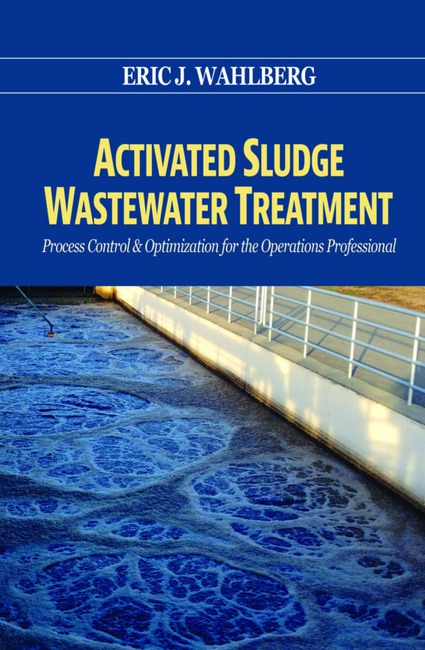
Contains information relevant to all levels of operator certification Scientific and data-driven process controls for activated sludge Includes a comprehensive list of common abbreviations and acronyms New ways for understanding, monitoring clarifiers, digesters, aeration basins and more Simplified math problem solving and statistics for control Strategies for reducing costs and recovering resources A handy reference, a valuable textbook, an operations manual Contains information relevant to all levels of operator certification Scientific and data-driven process controls for activated sludge Includes a comprehensive list of common abbreviations and acronyms New ways for understanding, monitoring clarifiers, digesters, aeration basins and more Simplified math problem solving and statistics for control Strategies for reducing costs and recovering resources A handy reference, a valuable textbook, an operations manual This book is a milestone in the evolution of wastewater treatment operations. It explains the science of treatment framed within an ethics where wastewater personnel are seen as protectors of public health, preservers of the environment, and stewards of public monies. Written by a former plant operator with a Ph.D., the book presents the fundamental science behind the unit processes in wastewater treatment plants, including biological nutrient removal. In so doing, it challenges longstanding operational doctrines enshrined by habit and tradition, such as being careful not to remove too many influent organics in a primary clarifier for fear of starving the microorganisms in the aeration basin, or using the MLSS concentration to control effluent quality, or cutting the growth rate of microorganisms in anticipation of their slower growth rate in winter. Dispelling much of the prevailing thats-the-way-weve-always-done-it dogma is achieved through an elegant and understandable presentation of the biology, chemistry, and physics that explain the phenomena of wastewater treatment. At the same time, the book is intensely practical. It offers detailed and data-based process control solutions to stabilize plant performance, maintain consistent effluent quality, and reduce energy costs. Powerful, easily implemented statistical techniques are given to unlock the meaning of plant performance data and make informed process control decisions. The books approach is learning-focused, including numerous examples of a failsafe, foolproof arithmetical method that enables operations professionals to define, set up, and solve problems. From the Foreword by Biju George, Chief Operating Officer, DC Water I had the privilege of working with Dr. Eric Wahlberg while I was managing the operations at Greater Cincinnati Metropolitan Sewer District. At the time, I was looking for a training program that would bridge the gap between the typical training available for operator certification and the coursework offered only at a university. Dr. Wahlberg tailored a program for our staff that addressed this need, and what he developed is reflected in this inventive book. His program consisted of fundamental elements such as: building basic math skills, understanding unit processes from the perspective of basic science, explaining the purpose of each unit process as an input to the following process, and identifying process bottlenecks to maximize throughput while minimizing operating cost and sludge inventory. This approach has proven invaluable for wastewater treatment plants with combined sewer overflows and those that treat high-strength waste to maximize revenue from idle capacity.

Reviews
There are no reviews yet.